Maryland Day 2026, University of Maryland, College Park Saturday, April 25, 2026
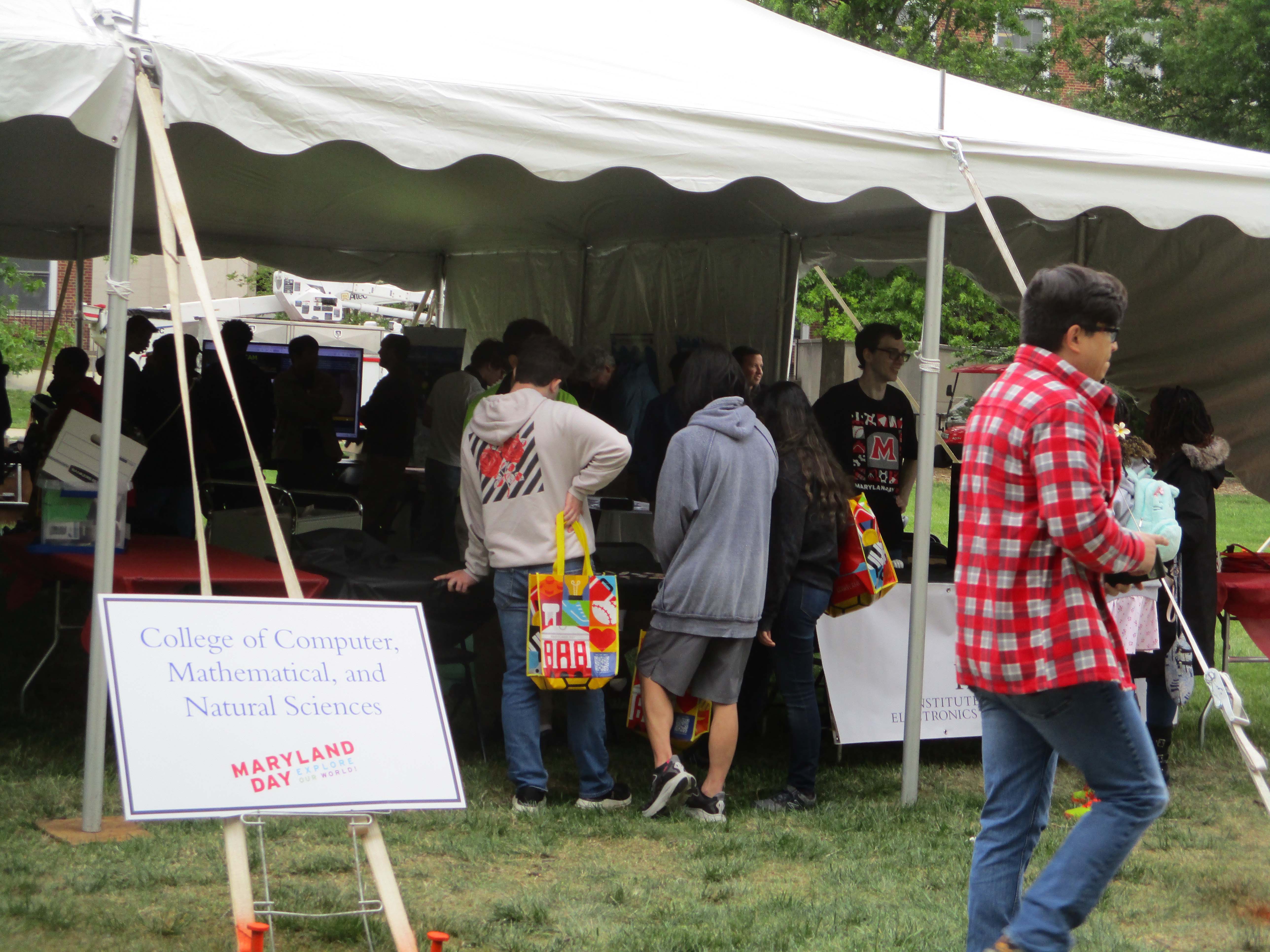
Welcome to IREAP's "Fun with Waves" Experiments
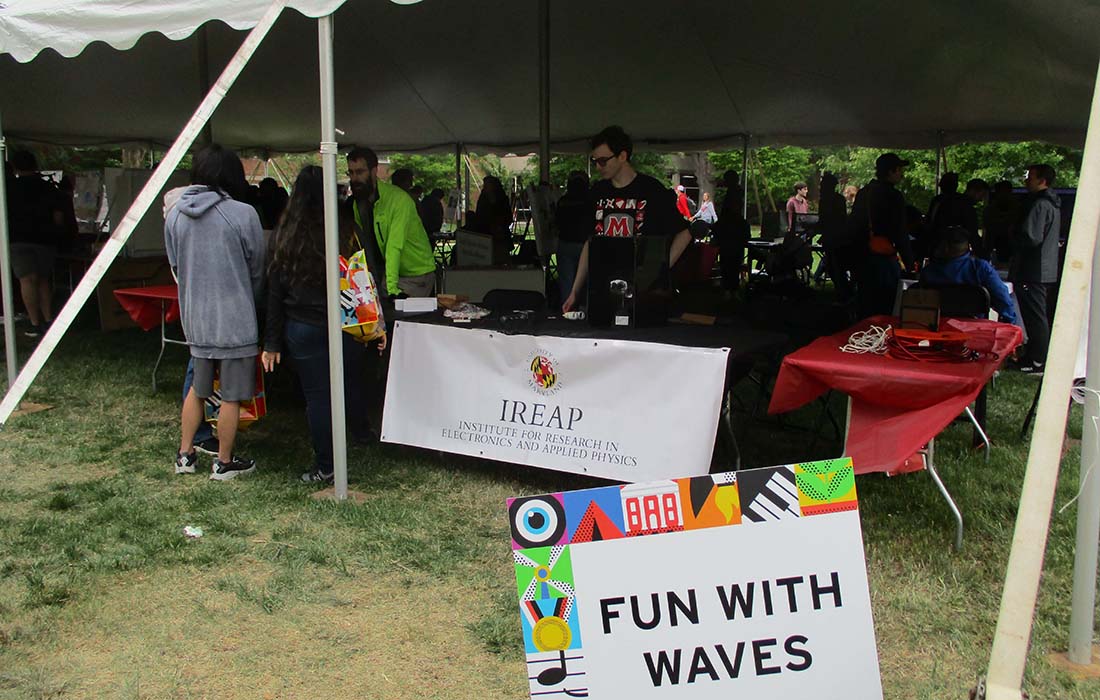
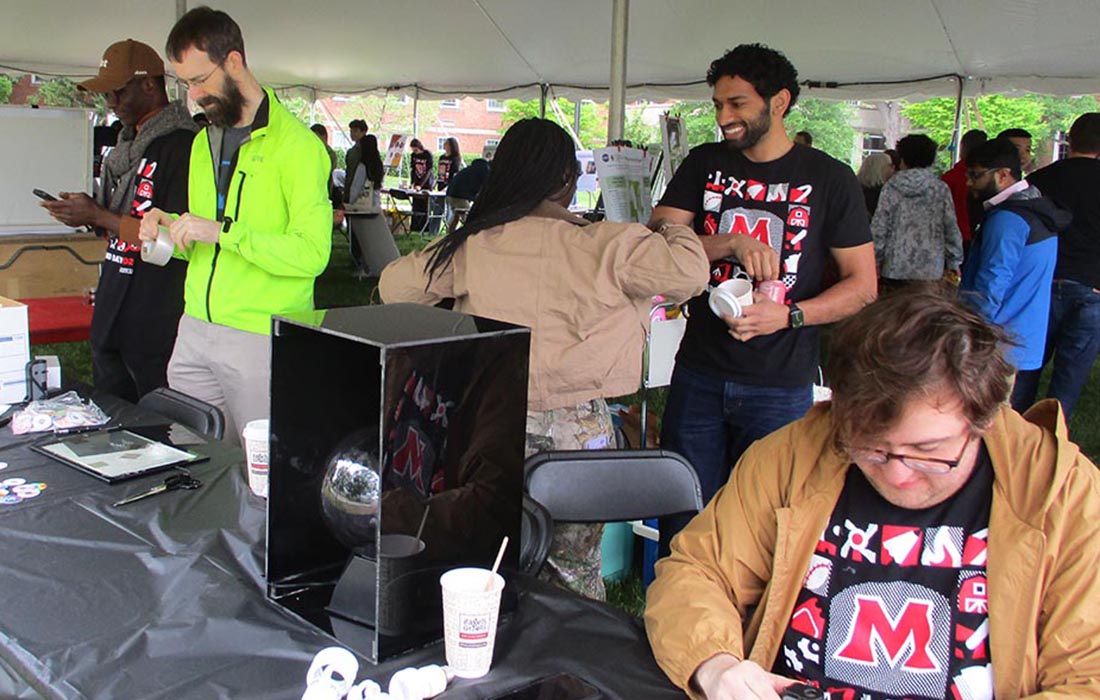
IREAP volunteers (Chidiebere Udenze, Jeffrey Schwartz, Milli Ayako, Rushil Dandamudi, and Bryan Birch) getting set up for Maryland Day.
Electromagnetism (theremin, plasma spheren)
The Story of the Theremin
The theremin, originally known as the aetherphone, etherphone, thereminophone or termenvox/therminvox) is an electronic musical instrument controlled without physical contact by the performer (who is known as a thereminist). It is named after its investor, Leon Theremin, who patented the device in 1928.
The instrument's controlling section usually consists of two metal antennas which function not as radio antennas but rather as position sensors. Each antenna forms one half of a capacitor with each of the thereminist's hands as the other half of the capacitor. These antennas capacitively sense the relative position of the hands and control oscillators for frequency with one hand, and amplitude (volume) with the other. The electric signals from the theremin are amplified and sent to a loudspeaker.
The sound of the instrument is often associated with eerie situations. The theremin has been used in movie soundtracks such as Miklós Rózsa's Spellbound and The Lost Weekend, Bernard Herrmann's The Day the Earth Stood Still, and Justin Hurwitz's First Man, as well as in theme songs for television shows such as the ITV drama Midsomer Murders and the Disney+ series Loki, the latter composed by Natalie Holt. The theremin is also used in concert music (especially avant-garde and 20th- and 21st-century new music); for example, Mano Divina Giannone is a popular American thereminist[citation needed] who along with his orchestra, The Divine Hand Ensemble, regularly holds said concerts. It is also used in popular music genres, such as rock.
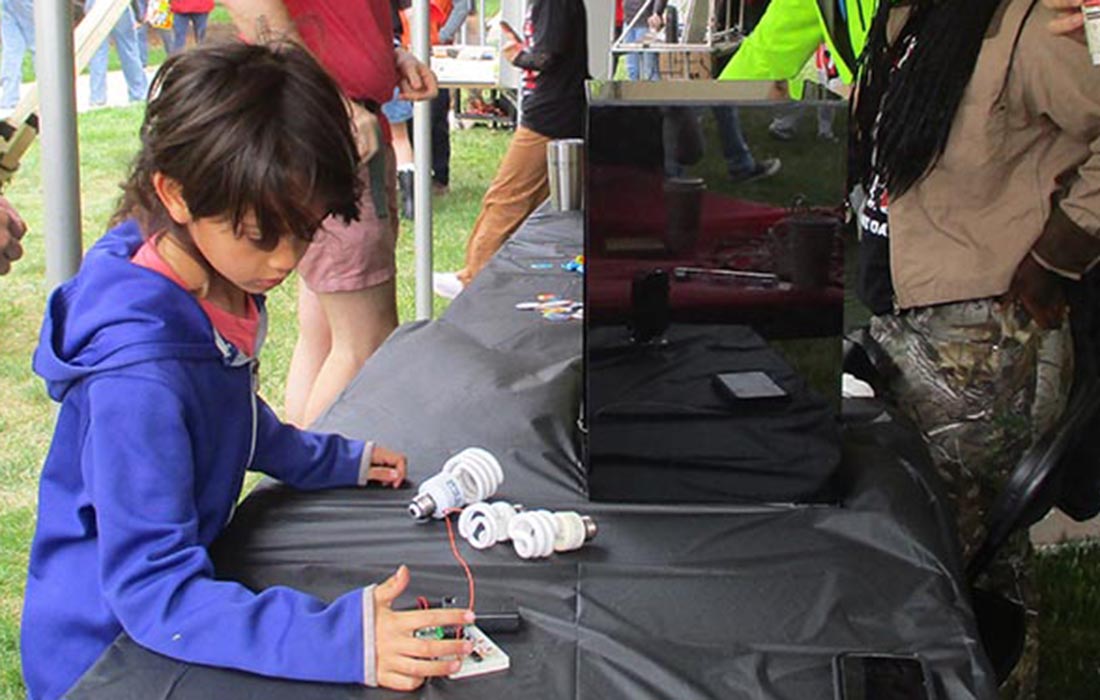
Plasma Sphere
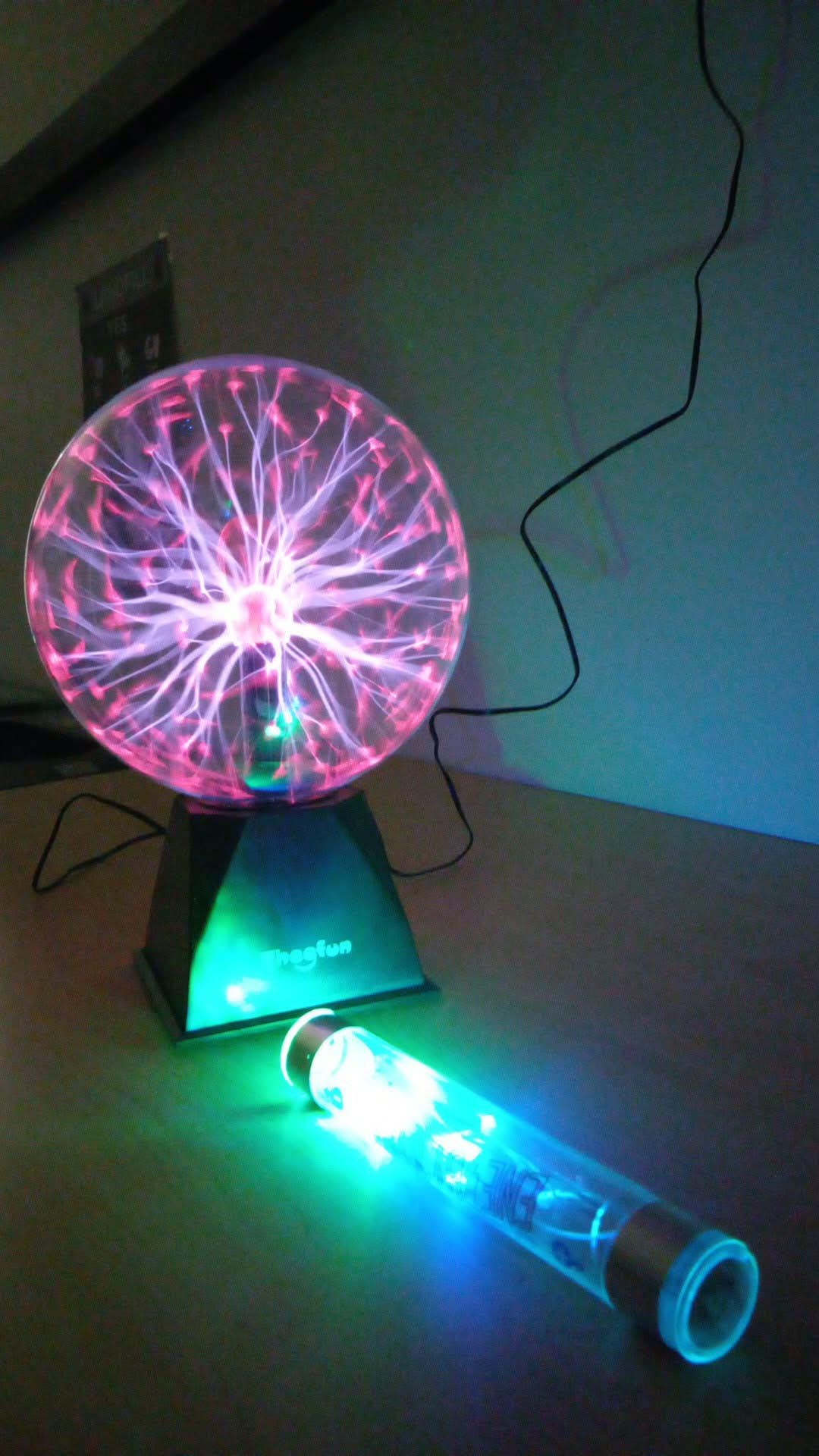
A plasma sphere, plasma ball, or plasma globe is a clear glass container filled with noble gases, usually a mixture of neon, krypton, and xenon, that has a high-voltage electrode in the center of the container. When voltage is applied, a plasma is formed within the container. Plasma filaments extend from the inner electrode to the outer glass insulator, giving the appearance of multiple constant beams of colored light. Plasma balls were popular as novelty items in the 1980s.
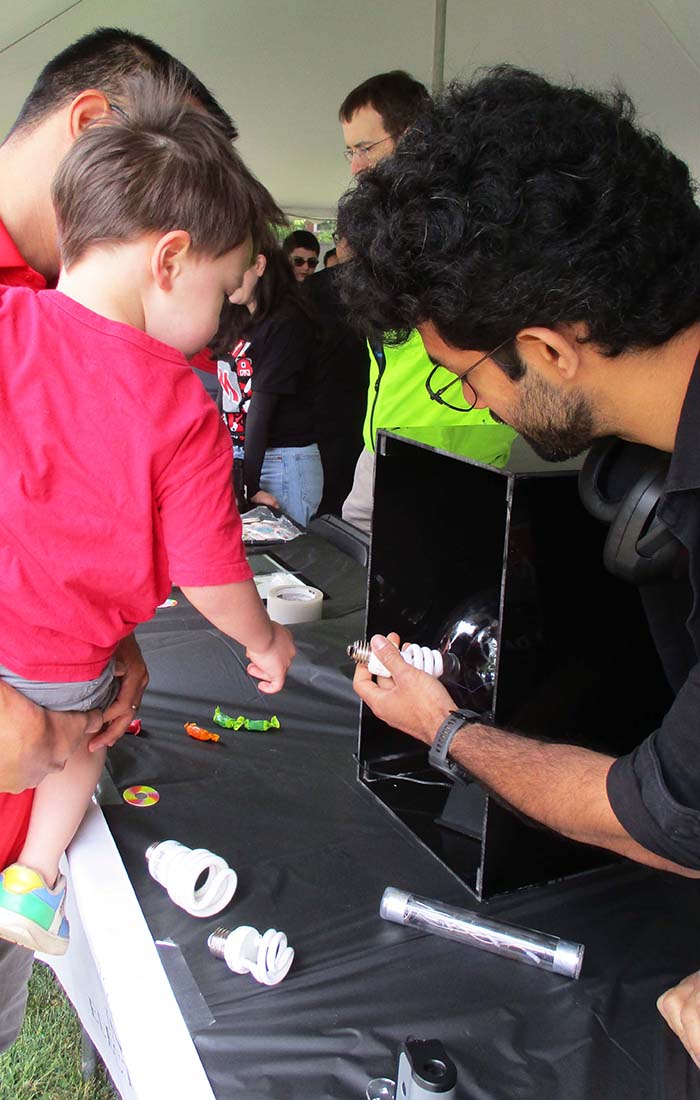
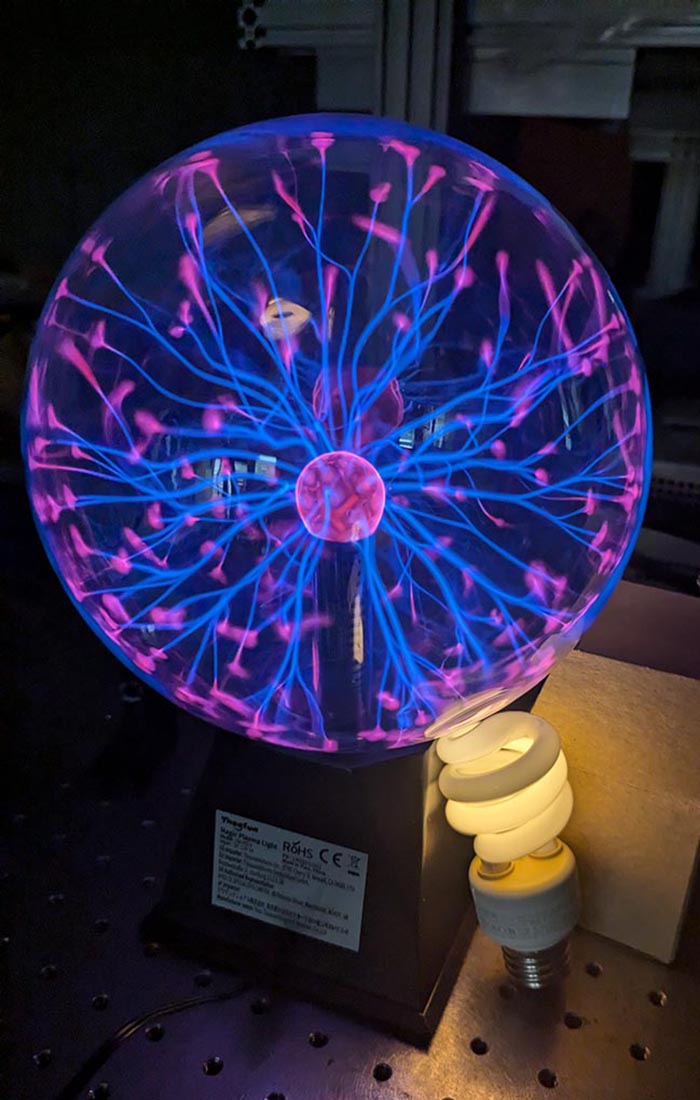
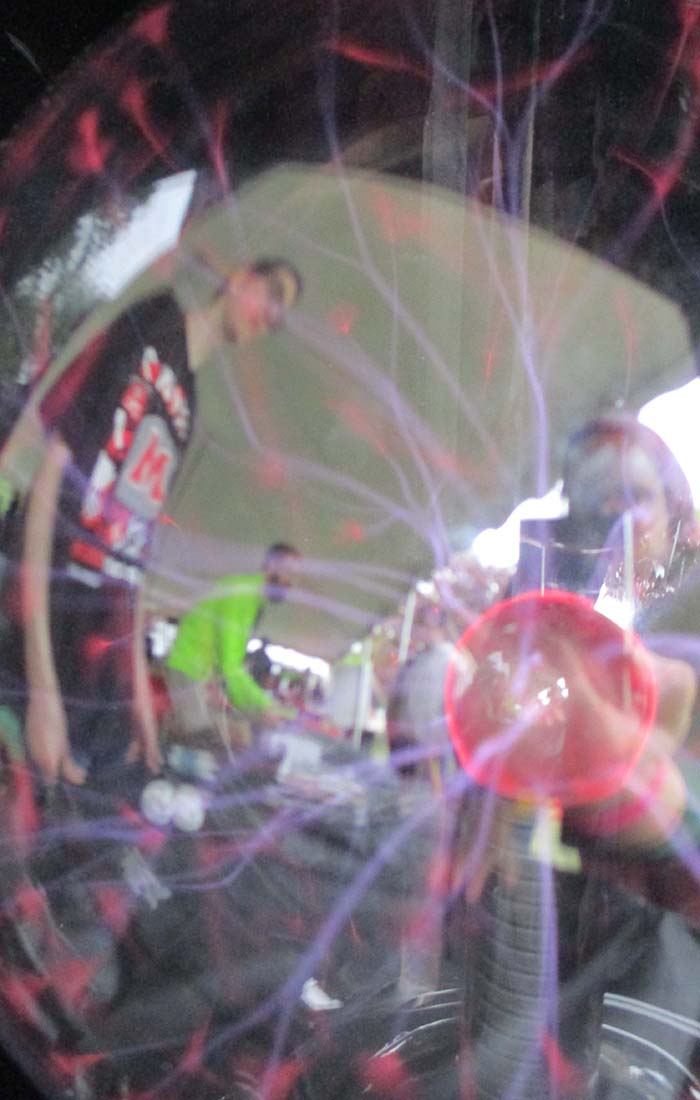
Pictures of the Activated Plasma Sphere
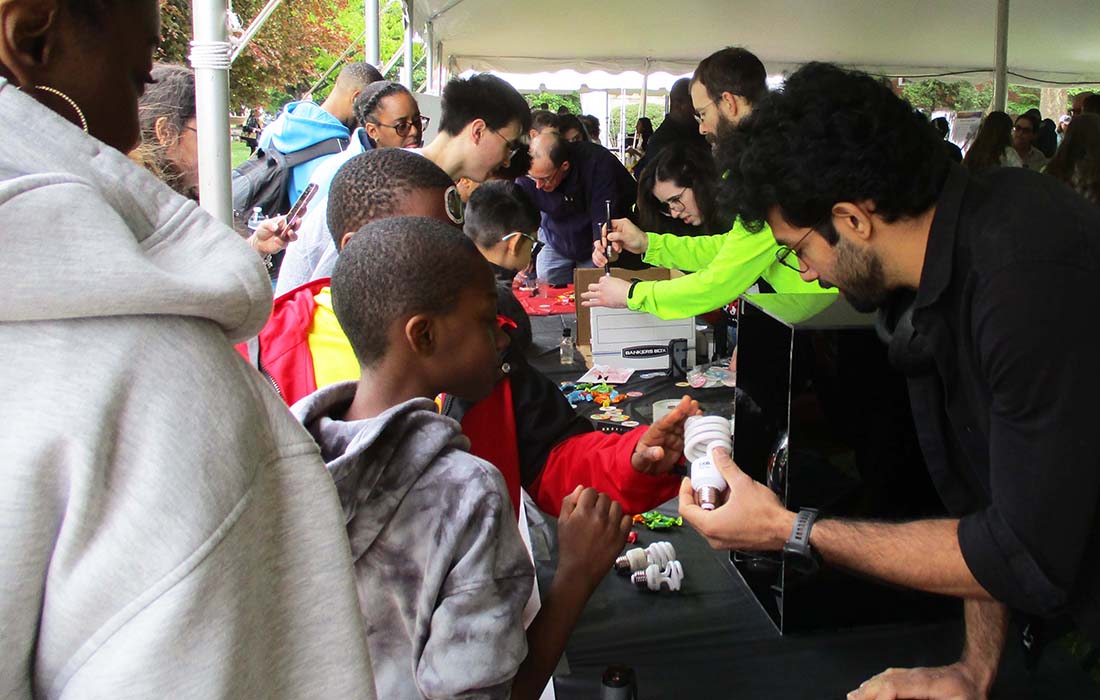
Optics (fluorescence in oils, light polarization)
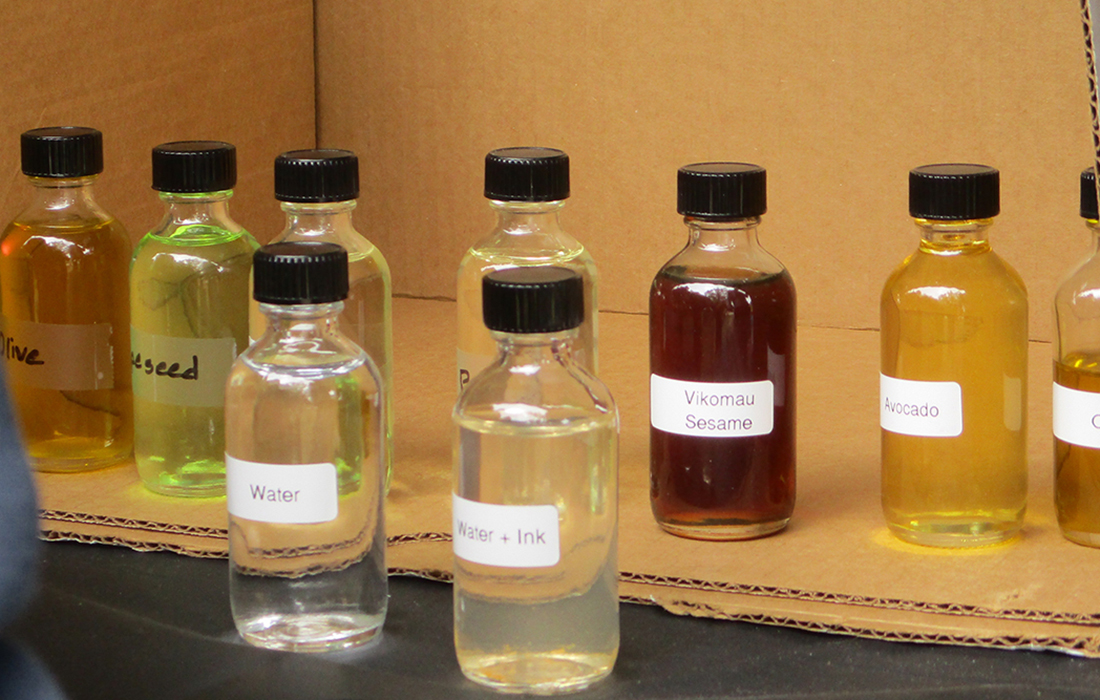
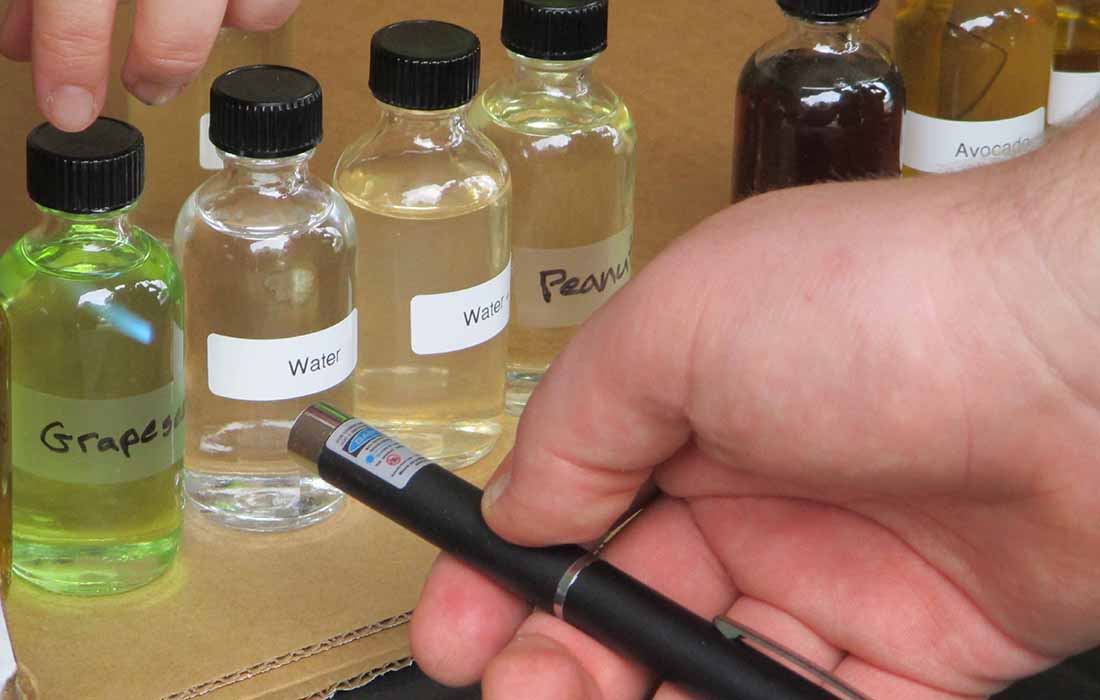
Fluorescence in Oils
Fluorescence in oils is the emission of light that occurs when specific components wihin the oil -- suh as aromatic hydrocarbons in crude oil or chlorophyll in vegetable oils -- absorb ultraviolet (UV) or short-wavelength light and re-emit it at a longer, visible wavelength.
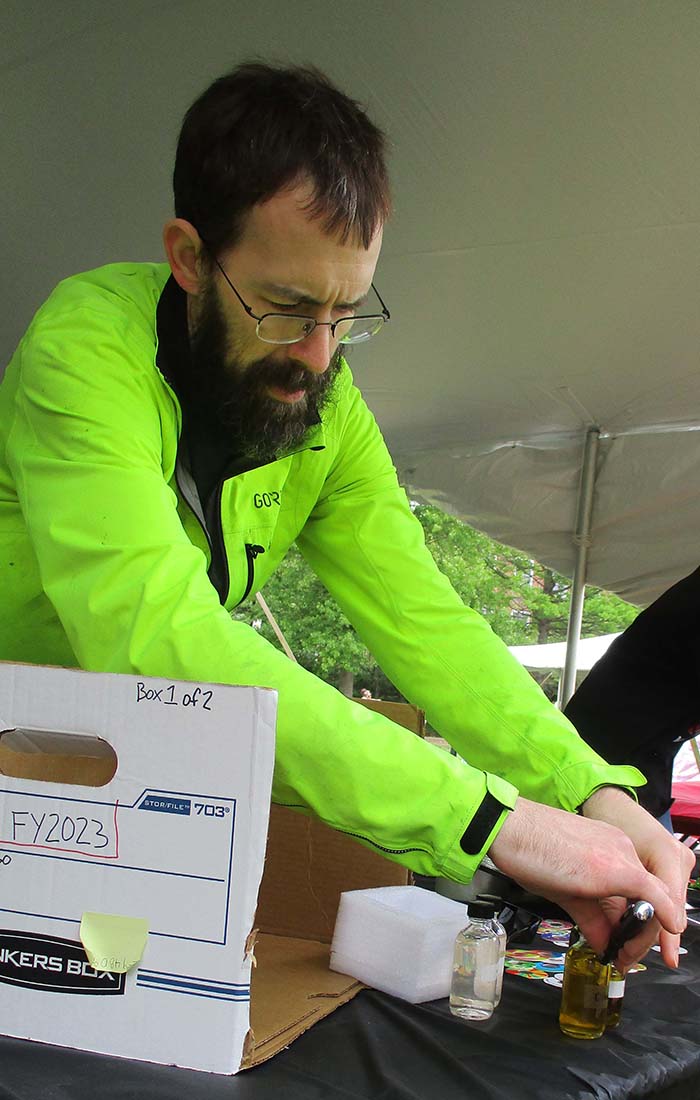
Dr. Jeffrey Schwartz
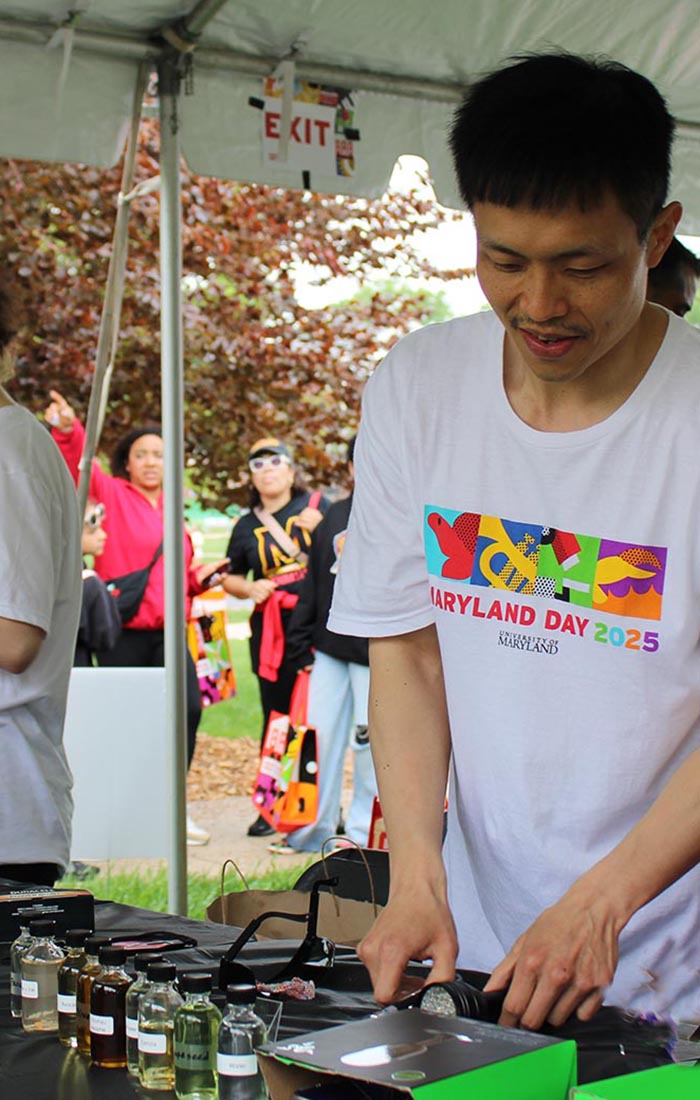
Sheng-Wei Wang volunteered in 2025 and 2026.
Magnified Pixels on Cell Phone
Observing phone pixels with a microscope reveals the hidden, microscopic grid of red, green, and blue (RGB) subpixels that create images, showing a "city" of tiny lights.
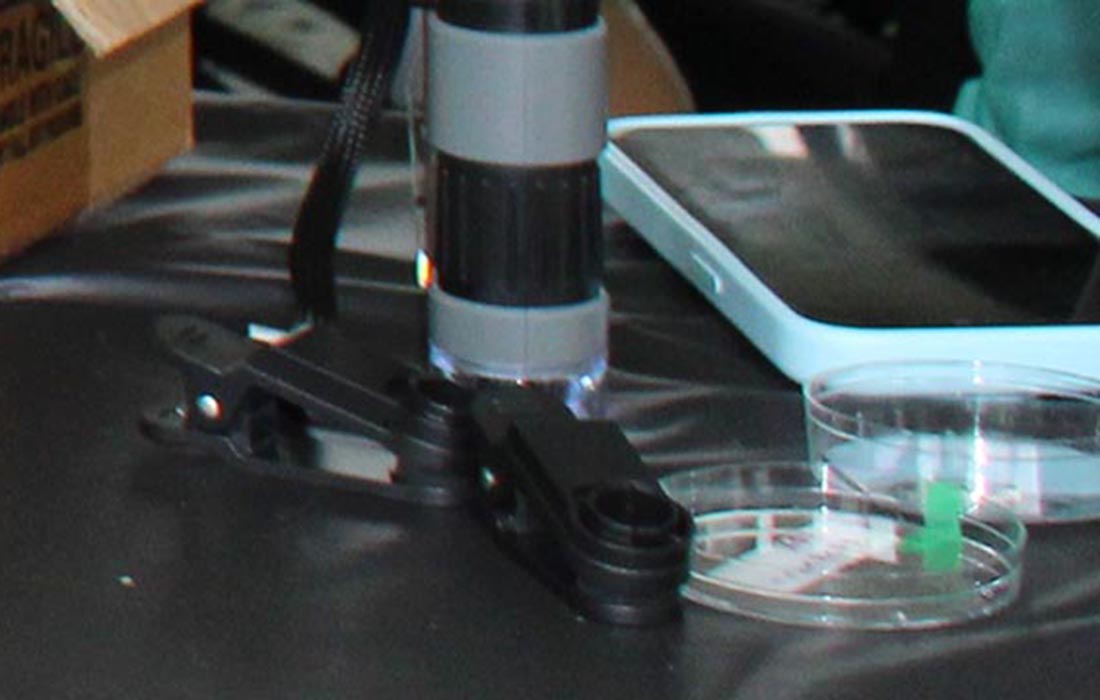
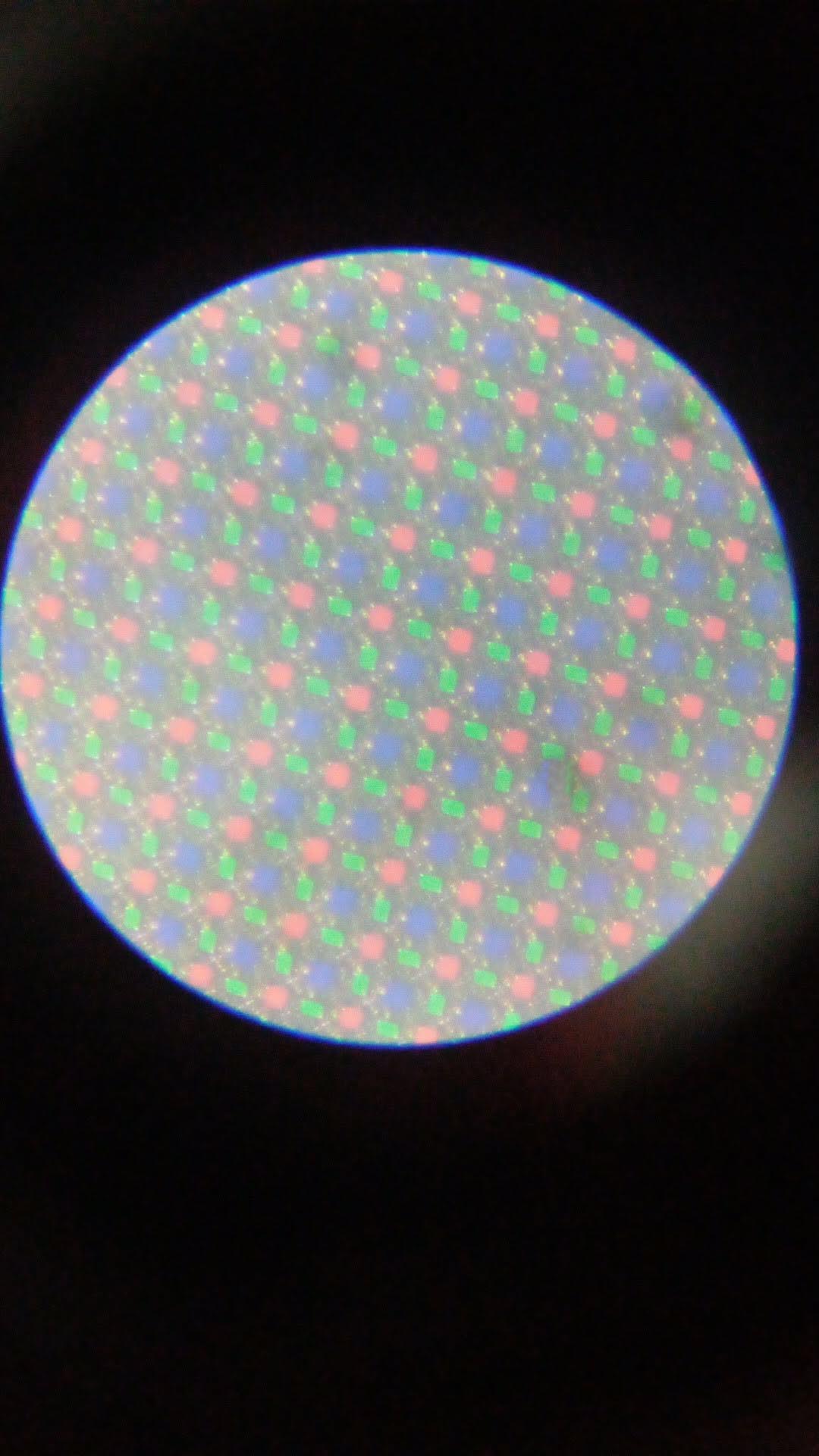
Magnified pixels of a cell phone using a hand-held microscope.
Magnetic Accelerator
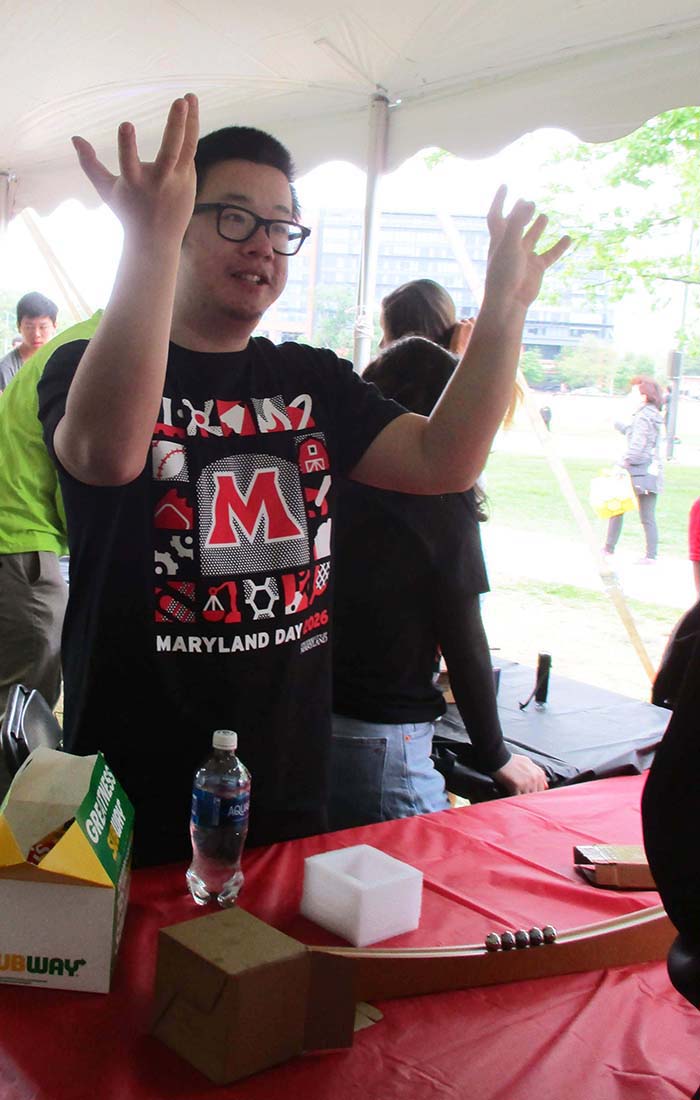
Quan Gan
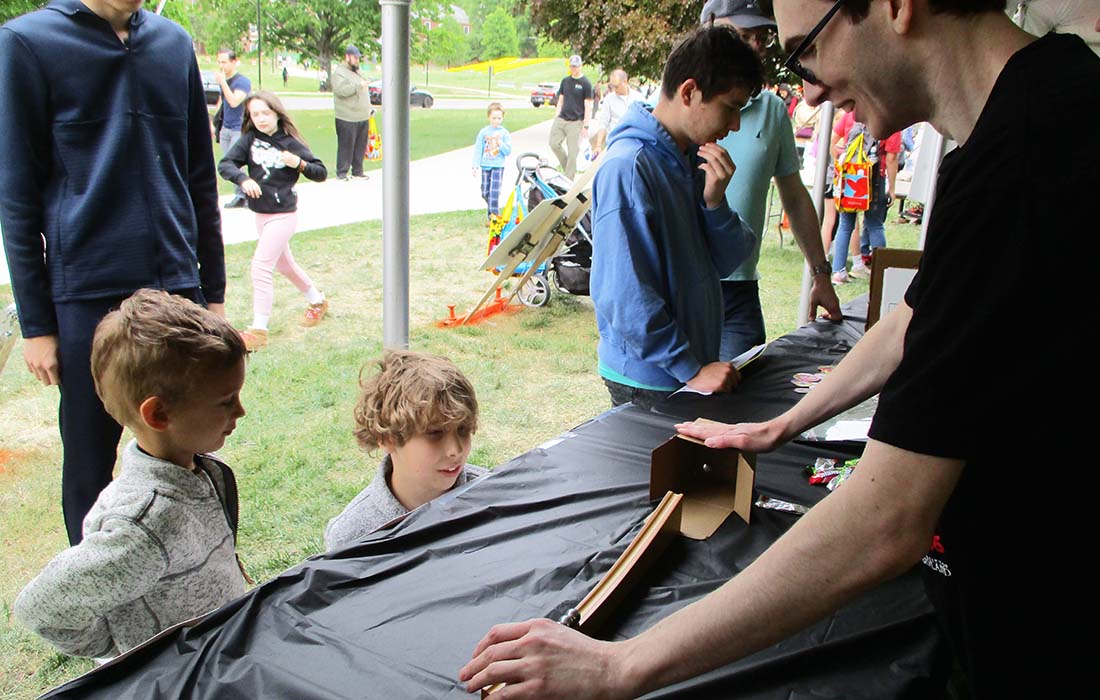
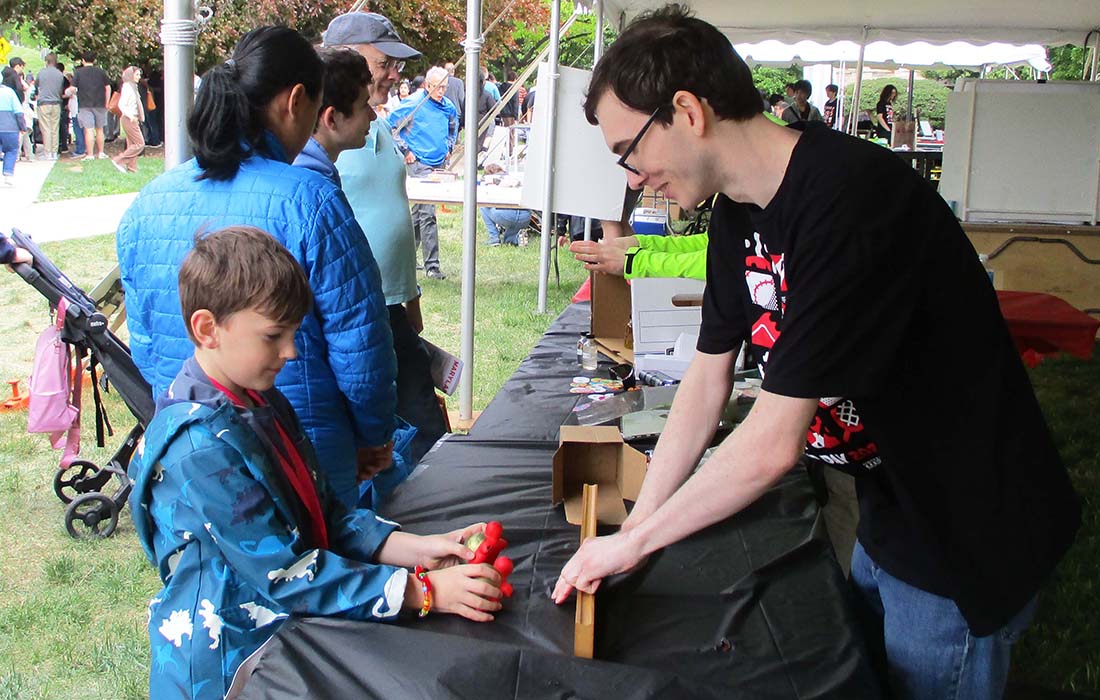
Prof. Richard Brewster
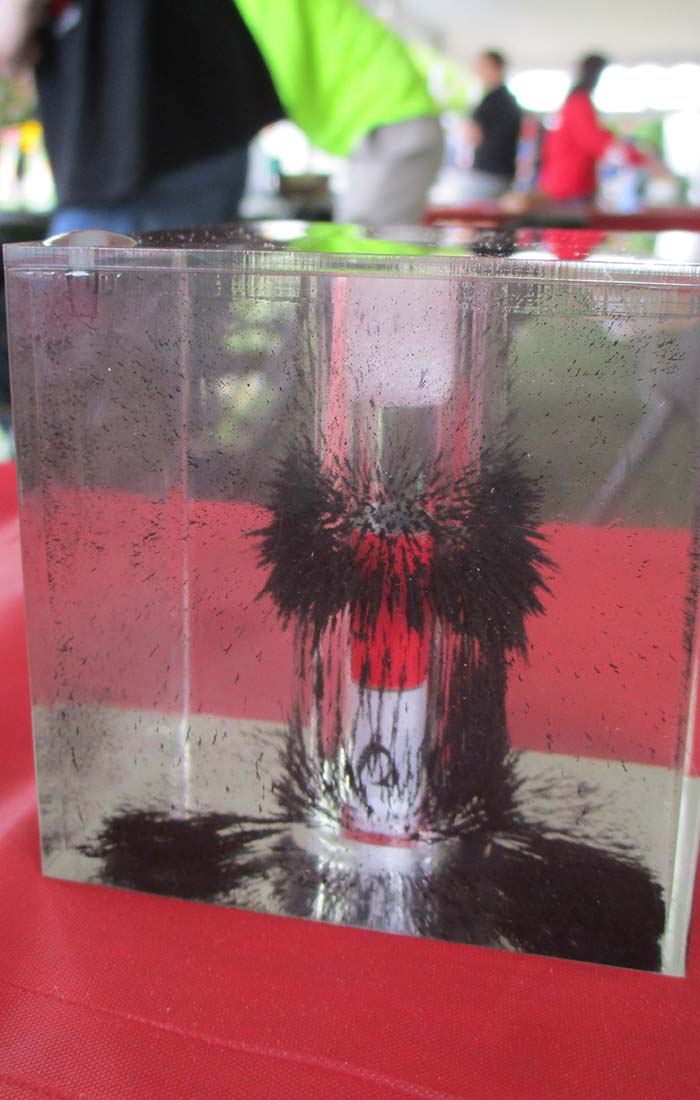
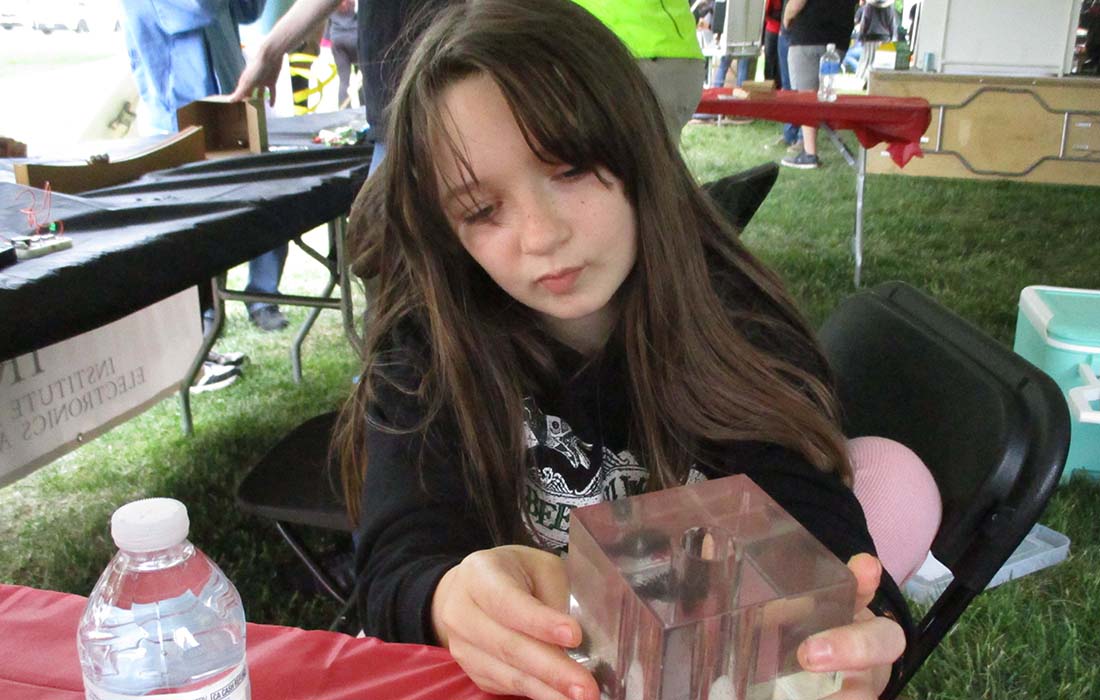
Magnetic Field Cube
The magnetic field cube is filled with iron filings suspended in a solution, allowing you to easily view magnetic field patterns by simply adding a magnet to the center of the cube. The patterns can be observed from all angles and easily manipulated with other magnets from the outside of the cube.
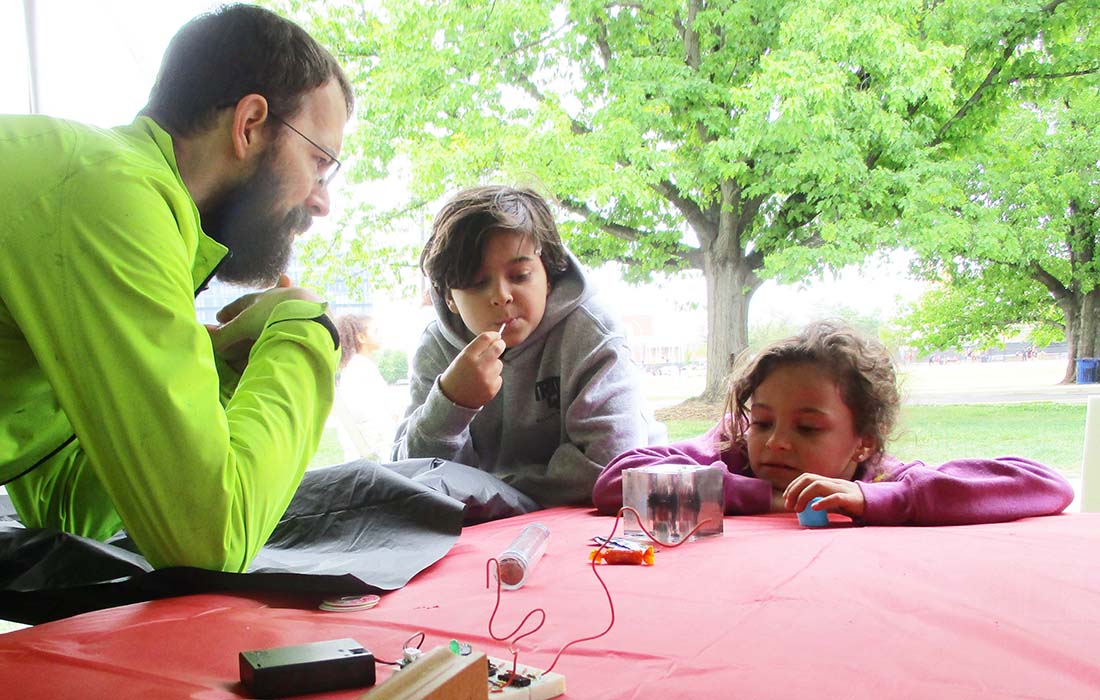
People Pictures
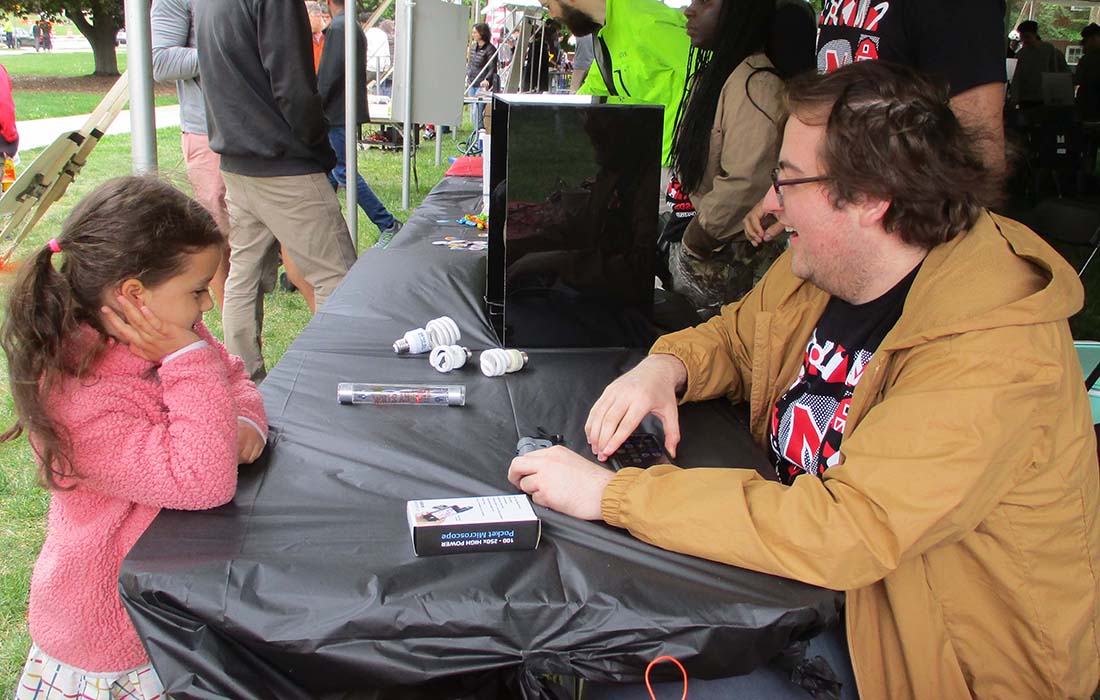
Bryan Birch
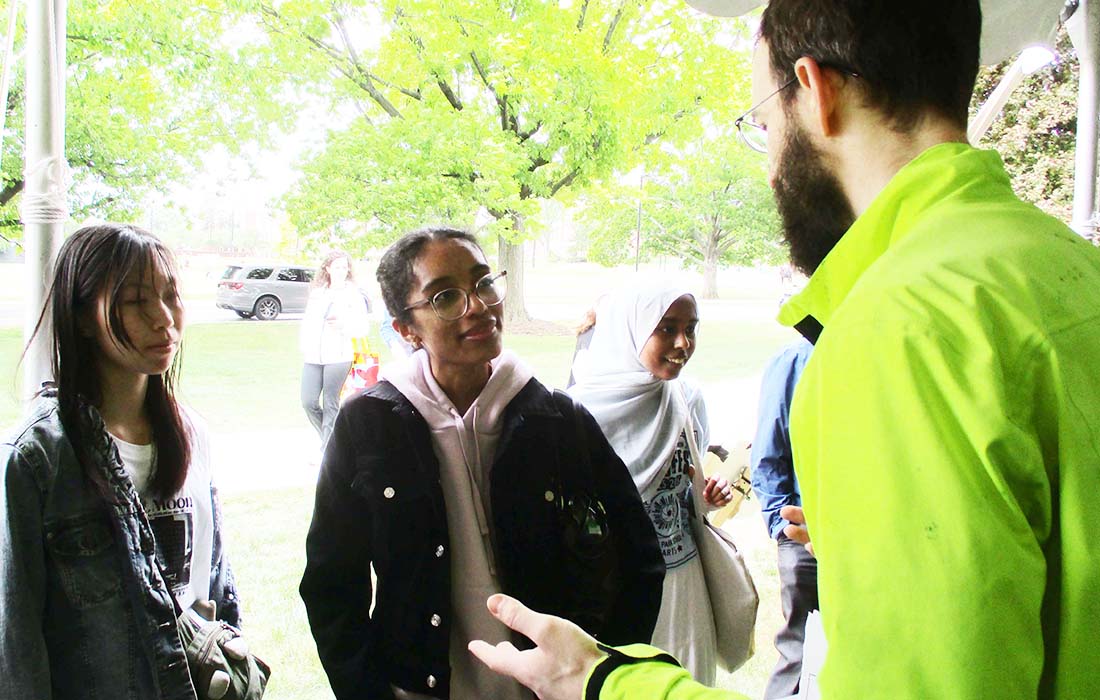
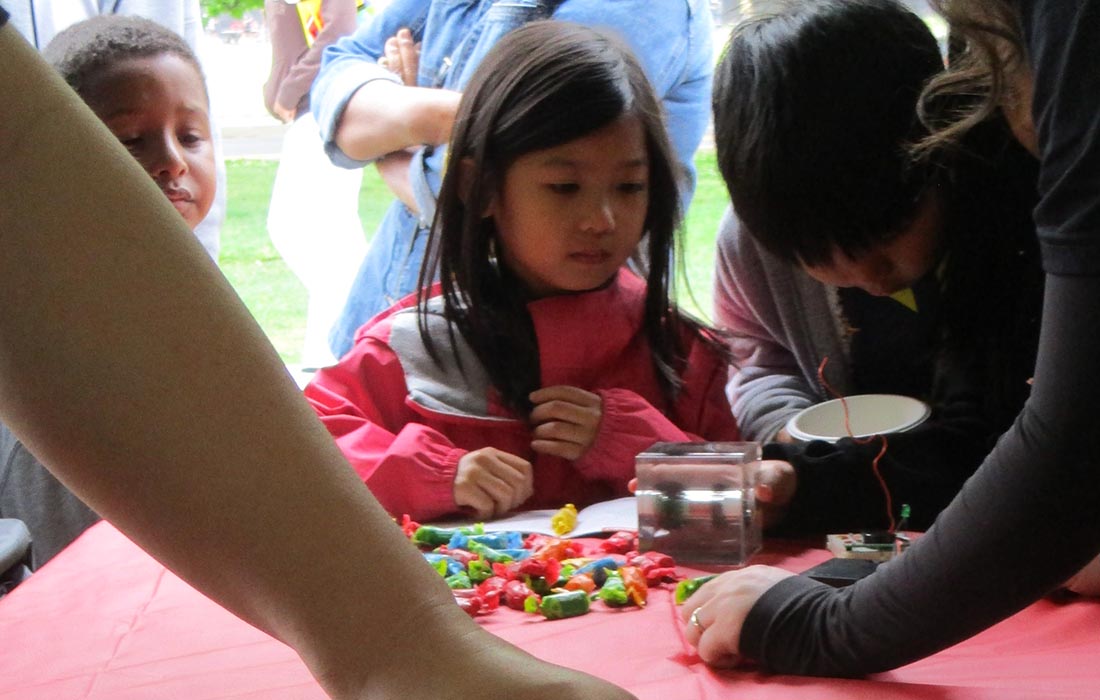
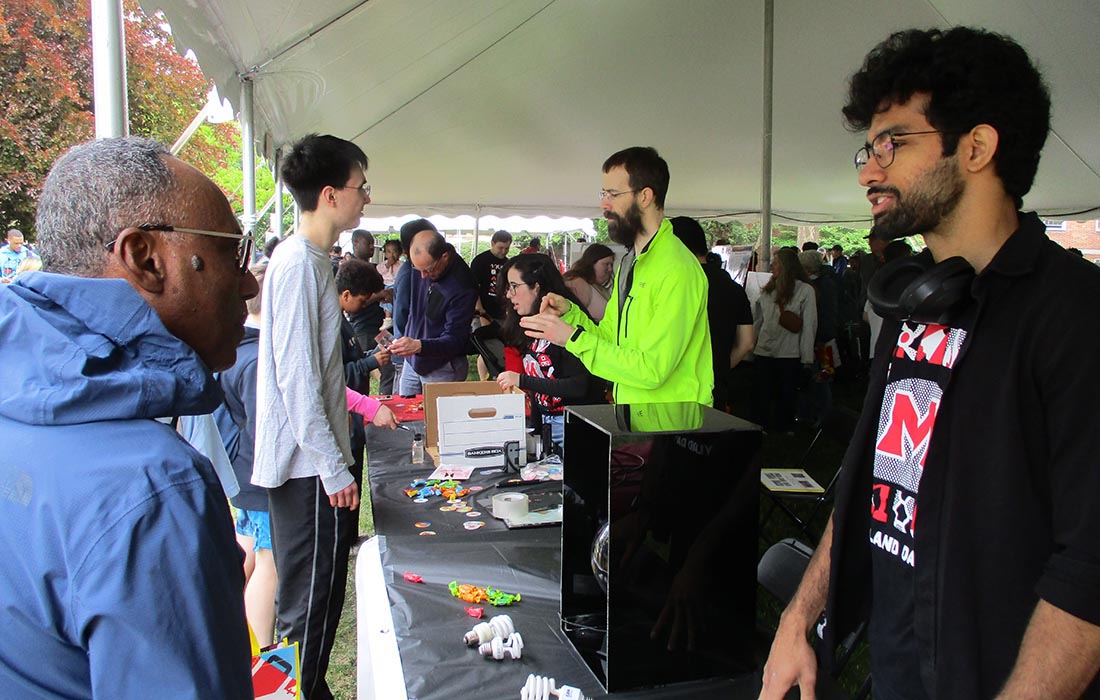
Nischal Tripathi
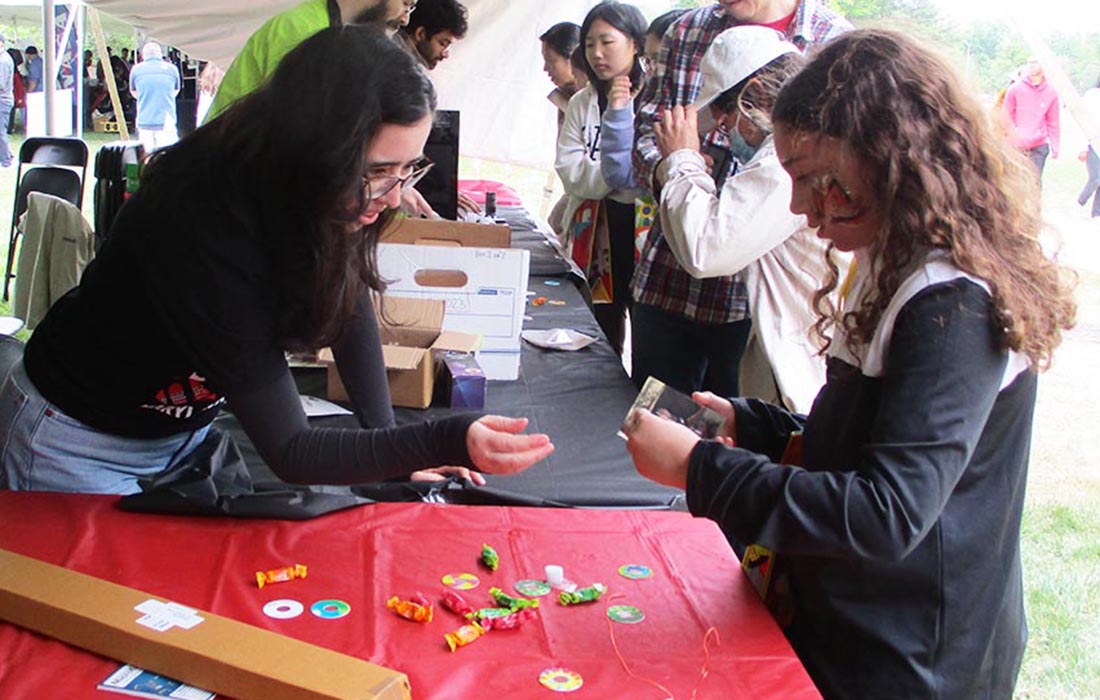
Sophia Sanchez-Maes
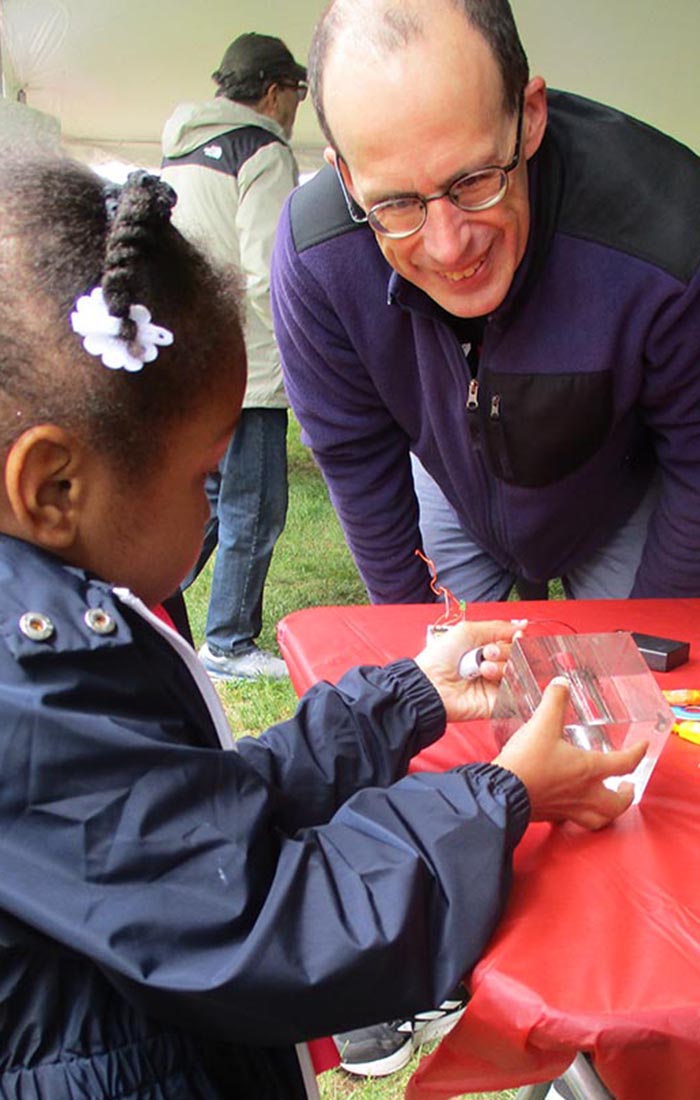
Dr. Marc Swisdak
Acknowledgements
We wish to thank our volunteers who explained the experiments to the many people who attended Maryland Day: Sophia Sanchez-Maes (Postdoctoral Research Associate, Prof. Philippov), Quan Gan (Graduate Research Assistant, Prof. Sprangle), Nishchal Tripathi (Graduate Research Assistant, Prof. Milchberg), Sheng-Wei Wang (Graduate Research Assistant, Prof. Rios Ocampo), Bryan Birch (Graduate Research Assistant, Prof. Rios Ocampo), Chidiebere Udenze (Graduate Research Assistant, Prof. Rios Ocampos), Milli Ayako (IREAP/ECE Graduate Research Assistant, Prof. Chembo), Rushil Dandamudi (Graduate Research Assistant, Computer Science), Dr. Jeffrey Schwartz (Associate Research Scientist, ECE), Dr. Marc Swisdak (Research Scientist, IREAP), and Prof. Richard Brewster (Assistant Research Professor, IREAP).
We whole-heartedly wish to thank Meredith Pettit, Chair of the IREAP Maryland Day 2026 Committee, for taking pictures of the people and the experiments and for her untiring efforts to make IREAP's presentations at Maryland Day a huge success.
Webpage: Dorothea F. Brosius
Archive: Maryland Day 2025, Maryland Day 2024, Maryland Day 2023
Top